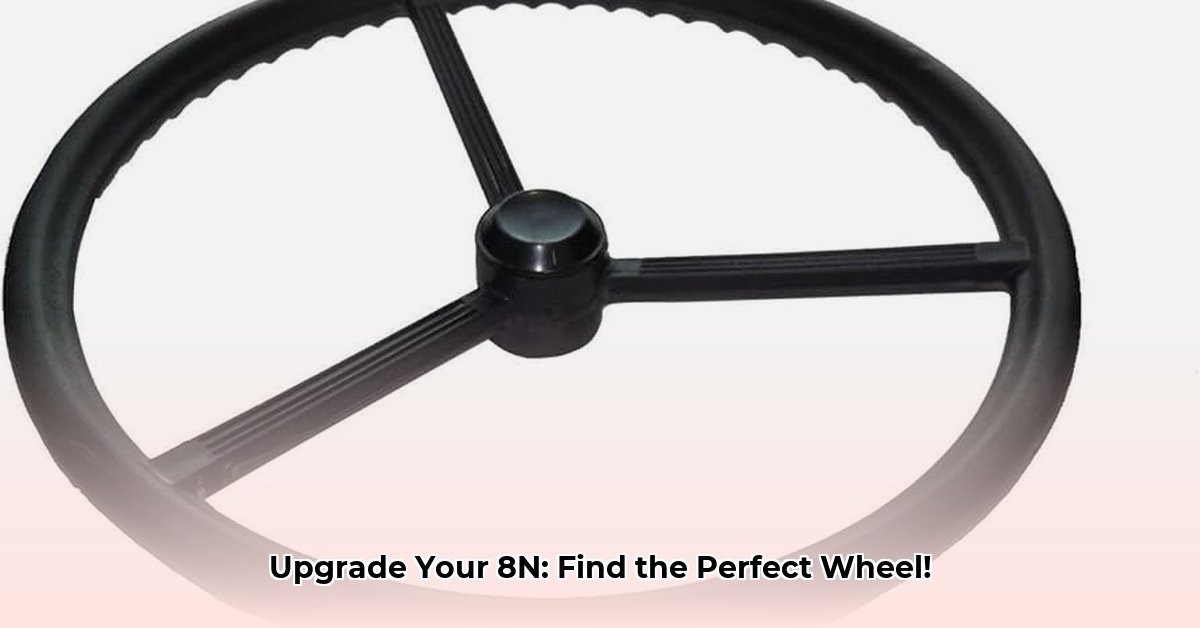
Finding a replacement steering wheel for your classic Ford 8N tractor shouldn't be a harrowing experience. Unfortunately, the market offers a wide range of quality and price points, making informed decision-making crucial. This guide equips you with the knowledge to choose a high-quality steering wheel, ensuring both safety and longevity for your beloved machine. Let's get started! For more Ford 8N resources, check out this helpful website: Ford 8N resources.
Understanding Ford 8N Steering Wheel Variations
Original Ford 8N steering wheels, often made of Bakelite, are becoming increasingly rare and rarely in perfect condition. Replacement wheels are typically crafted from steel, wood, or composite materials. Each option presents a unique set of advantages and disadvantages:
Steel: Offers exceptional durability and strength, resisting damage effectively. However, steel wheels are heavier and susceptible to rust, especially in damp environments. Regular maintenance, including painting, is often required.
Wood: Provides a classic, aesthetically pleasing look, enhancing the vintage charm of your Ford 8N. However, wood requires careful maintenance to prevent cracking and weathering. Regular sealing and protection from the elements are essential.
Composite: Many composite steering wheels successfully mimic the appearance of wood while offering increased durability and resistance to cracking. They frequently represent a cost-effective balance between the ruggedness of steel and the visual appeal of wood.
Assessing Steering Wheel Quality: A Comprehensive Checklist
Before purchasing, a thorough inspection is vital. Don't let a low price tempt you into compromising safety! Here's a checklist to assess quality:
Material Quality: For steel, verify thickness and the smoothness of the finish. Avoid wheels showing signs of damage or weak points. With wood, look for solid construction free of cracks or significant blemishes. The finish should be durable and even. For composite materials, ensure strength and resistance to deformation.
Construction: Meticulously examine welds (if present). They should be clean, strong, and devoid of imperfections. The entire wheel should feel robust and sturdy, without any noticeable flex or wobble. A shaky wheel is a significant safety hazard.
Compatibility: This is paramount! Verify compatibility with your specific Ford 8N model. Precisely match the diameter, bolt pattern, and hub size. An ill-fitting wheel leads to frustration and potential damage.
Where to Buy: Reputable Sources for High-Quality Wheels
Prioritize reputable sources to ensure you receive a high-quality product. Avoid remarkably low-priced options; they often reflect inferior materials and construction.
Reputable Online Retailers: Several online retailers specialize in classic tractor parts. Thoroughly research reviews and choose vendors with a history of satisfied customers. (Note: Insert links to reputable online retailers here.)
Local Agricultural Supply Stores: Your local agricultural supply store might stock replacement wheels or be able to direct you to a trusted supplier. In-person inspection allows for a hands-on assessment of quality.
(Optional) Installation Guide: A Step-by-Step Approach
Disclaimer: This is a simplified guide only. Consult a professional mechanic if unsure. Improper installation could damage your tractor or cause injury.
- Safety First: Disconnect the battery before starting any work.
- Removal: Carefully remove the old steering wheel. This often requires specialized tools and may involve the use of penetrating oil to loosen corroded components. (Consult your tractor's manual for specific instructions).
- Alignment: Carefully align the new wheel with the steering column, ensuring proper centering.
- Securing: Tighten the wheel using the appropriate fasteners, ensuring they are secure without over-tightening.
- Reconnect: Reconnect the battery and test your steering for smooth operation.
Troubleshooting Common Issues
Loose Wheel: Check all bolts for tightness. If the wheel remains loose, internal damage to the steering column might exist, requiring further investigation.
Stiff Steering: This usually indicates issues beyond the steering wheel itself. Inspect the steering linkage, lubrication, and front-end components. Worn bushings, tie rod ends, and other parts of the steering system can significantly hamper steering performance. Regular lubrication is crucial.
Key Takeaways: Ensuring a Smooth Ride for Years to Come
Choosing the right steering wheel for your Ford 8N is paramount for safety and operational efficiency. Remember these key considerations:
- Thorough Inspection: Carefully inspect any potential replacement for quality of materials and construction.
- Compatibility: Confirm perfect compatibility with your tractor to avoid installation frustration.
- Reputable Sources: Purchase from trusted sources to minimize risk.
- Avoid Cheap Options: Ultra-low prices generally indicate low quality.
- Regular Maintenance: Regular lubrication and inspection are essential for smooth and safe steering.
Choosing the right steering wheel for your Ford 8N isn't merely an aesthetic choice – it's a crucial step in ensuring the safe and smooth operation of your classic tractor. By following this guide, you're well-equipped to make the best decision for your needs.